21 October 2026

A meal can be the beginning, not the whole gift. Dining gift vouchers from The Snooty Fox may offer a set restaurant experience or monetary credit, with the voucher’s terms determining whether it can be used towards a meal, a stay or another experience.
That flexibility makes a voucher a thoughtful way to give someone a special outing, especially when you’re unsure which date or occasion will suit them. The key is knowing what the gift covers and how its value can be used.
This guide explains the difference between dining and monetary vouchers, how they may apply to meals, stays and experiences, and what to consider when choosing one. You’ll have a clearer sense of which kind of gift best suits the person you have in mind.
A monetary voucher gives the recipient a set value to put towards an eligible purchase. To choose well, consider whether they would prefer a restaurant meal, a stay or another experience.
Rather than choosing a particular meal, you select a value for the recipient to spend according to the voucher’s terms. This suits someone who enjoys browsing a menu and choosing their own dishes, or would like to decide how to use the gift later.
Before buying, read what the value covers, where it can be redeemed and whether any exclusions apply. A voucher restricted to restaurant dining, for example, won’t necessarily contribute towards a room stay. The terms show whether the gift is intended for one purchase or allows broader choice.
A flexible gift card can work well when you’d rather offer spending choice than select a particular experience. The recipient might put it towards a meal, then choose dishes to suit the occasion and their appetite.
Read the card’s terms before choosing this format. Check whether it applies to the setting you have in mind, how any remaining value is handled after a smaller purchase, and whether it can be used across different eligible options. These details determine how flexible the gift is in practice.
A monetary voucher offers similar choice, but the word “voucher” alone doesn’t explain how redemption works. Its terms specify which purchases qualify and how the value is applied.
Match the terms to your intended gift. If you hope to treat someone to dinner, look for wording that covers restaurant dining. If you have a stay in mind, the voucher must apply to accommodation. Compare its stated use with the recipient’s likely plans, then choose the option that fits.
A voucher’s terms determine where and how its value can be used. Read them before choosing a dining, stay or other experience gift.
There’s no standard validity period for dining vouchers. The expiry date or validity terms on the individual voucher set the period, so use them to plan the recipient’s visit.
For a seasonal gift, such as a winter meal or family celebration, allow the recipient time to arrange a suitable date before the stated expiry. The voucher’s value and experience matter less if its use-by date doesn’t fit their plans.
Restaurant vouchers can have booking conditions, date restrictions or blackout dates. Read the terms to see which apply before arranging a table, particularly for a seasonal event or family gathering.
Some experiences are tied to a particular date or session, while a monetary voucher may give the recipient more choice. For a family experience, compare the booking requirements with the event schedule and the group’s preferred date.
A dining voucher can contribute towards a bill if its terms allow restaurant redemption. Those terms also explain how the value is applied at payment, so the recipient should follow the voucher’s instructions.
Cash redemption and change aren’t automatic features of a voucher. Its conditions explain whether unused value can be carried forward or change is given. Don’t assume either applies.
For a hotel stay or retreat, distinguish accommodation from restaurant credit: a dining-only voucher doesn’t automatically cover a room. Other activities are separate, and their inclusion depends on the voucher’s eligible uses.
Seasonal events and family experiences may require booking for a particular date, while a general monetary voucher can offer a different kind of choice. Match the gift to the intended outing, then read the terms to understand how redemption works.
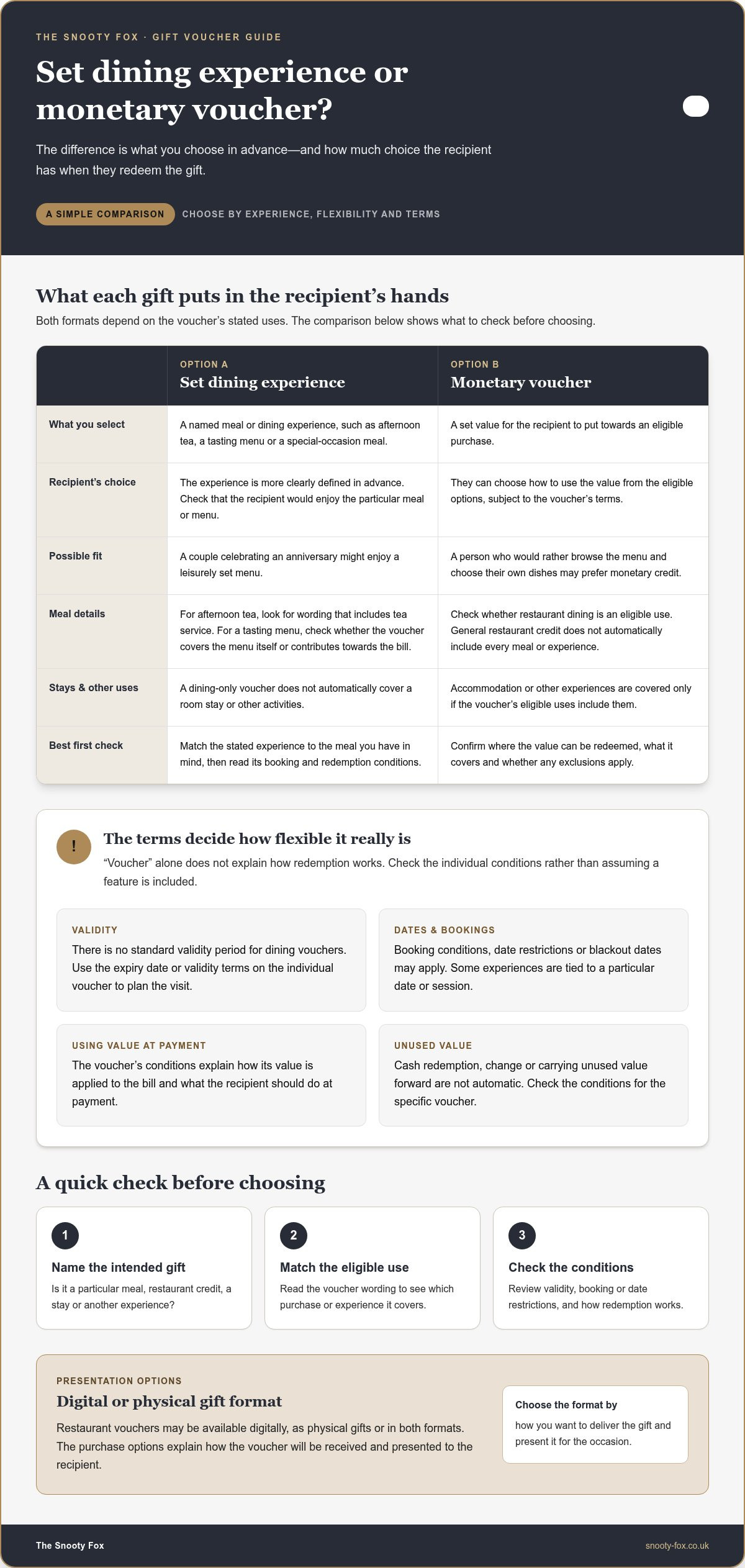
Yes, Cotswolds dining vouchers may be offered for set experiences, including afternoon tea, tasting menus or special-occasion meals. Whether a voucher covers a particular experience depends on its stated use, so match the description to the meal you have in mind.
A restaurant voucher can make a meal the centrepiece of a birthday, anniversary or thank-you. Decide whether you want to give a named dining experience or let the recipient choose from eligible restaurant options. This helps avoid gifting a set menu to someone who would rather choose their own dishes.
For afternoon tea, look for wording that specifically includes tea service, rather than assuming general restaurant credit covers it. For a tasting menu, check whether the voucher covers the menu itself or contributes towards the bill. These details clarify what the recipient can expect.
A special-occasion meal may involve a particular menu or booking arrangement. Read the terms for date, reservation or redemption conditions, then choose an option that suits the recipient’s plans. A flexible monetary voucher, for example, may suit someone who wants to decide on the occasion and meal later.
Think about the guest as well as the food. A couple celebrating an anniversary might enjoy a leisurely set menu, while friends marking a birthday may prefer a voucher that lets them choose their dishes. The right format depends on how much choice you want to leave open.
Before buying, follow this simple check: identify the intended meal, read the voucher’s eligible-use wording, then consider whether its conditions suit the recipient. This helps distinguish an afternoon tea treat from restaurant credit, or a specific tasting menu from a broader dining gift.
Select an amount that suits the occasion and the contribution you want to offer, while letting the recipient use the voucher according to its terms. Review the details before purchase to make sure the value fits your intended gift.
Restaurant vouchers may be available digitally, as physical gifts or in both formats. The purchase options explain how you’ll receive the voucher and present it to the recipient.
For an online gift, follow the seller’s purchase steps and choose from the voucher types and values shown. Digital delivery can suit a last-minute birthday present or someone who lives outside the Cotswolds. Read the delivery details before paying to find out how the voucher will arrive.
A physical voucher gives you something tangible to place inside a card or wrap with a small treat. Check the stated delivery method and timing, then allow for it when planning an occasion such as a birthday dinner. Packaging and postage options vary, so use the choices shown during purchase rather than assuming they’re included.
Whether you choose a digital or printed format, keep the voucher details together. The recipient may need its reference or code when booking or paying, along with any terms on eligible dining and expiry. Make sure they receive the redemption information, not just a message saying a meal awaits.
Keep the selection process simple: decide whether you want an instant digital present or a keepsake, choose a suitable voucher, then review its delivery and redemption instructions. Digital delivery can suit someone who lives far away, while a printed voucher may feel more personal when handed over at a family gathering.
Before completing an order, read the purchase page for the selected voucher’s format, delivery method and terms. These practical details can shape the gift as much as its dining purpose. If a Cotswolds meal is the occasion, explore gift voucher options and choose a presentation that suits the recipient.
The Snooty Fox offers a Four Poster Room for guests who want to turn a Cotswolds dining gift into a longer stay. It’s a natural choice for someone who would enjoy pairing a meal with time away, rather than treating dinner as a single occasion. The room’s spacious layout, en-suite bathroom and seating area make it an inviting option for a special escape.
Other accommodation options include the Superior Room, Standard Double Room and Compact Double Room. These choices give you several room types to consider when planning a gift around a visit. For a quieter, unhurried break, think about whether the recipient would appreciate staying overnight as well as dining.
To explore the rooms or discuss a stay, contact The Snooty Fox.
The best gift leaves room for the recipient to make the occasion personal. Cotswolds dining gift vouchers let you give someone the pleasure of choosing a meal and deciding how they’d like to spend their time.
If they’re also planning a stay, The Snooty Fox offers four room types: Four Poster Room, Superior Room, Standard Double Room and Compact Double Room. A voucher and a room booking are separate decisions, so consider them complementary parts of a thoughtful getaway rather than assuming one covers the other.
Think about the person receiving the gift: would they enjoy a relaxed meal, or might they turn the occasion into a longer escape? Let the answer guide your choice, then explore the options at your own pace.
Contact The Snooty Fox to talk through your plans. A memorable gift can begin with a simple idea, and there’s plenty of pleasure in choosing what suits them best.
Cotswolds dining gift vouchers may cover restaurant dining, such as afternoon tea, a Sunday roast or other dishes, depending on their terms. A gift might name a particular experience or offer value towards a meal. Look for the exact dining option included, so the recipient knows whether they’re receiving a set experience or more freedom to choose.
There’s no single price for dining gift vouchers across the Cotswolds. The amount depends on whether you choose a monetary voucher or a named dining experience, and what that experience includes. For a monetary gift, select a value that suits your budget; for a set meal, check the listed price and what it covers.