9 November 2026

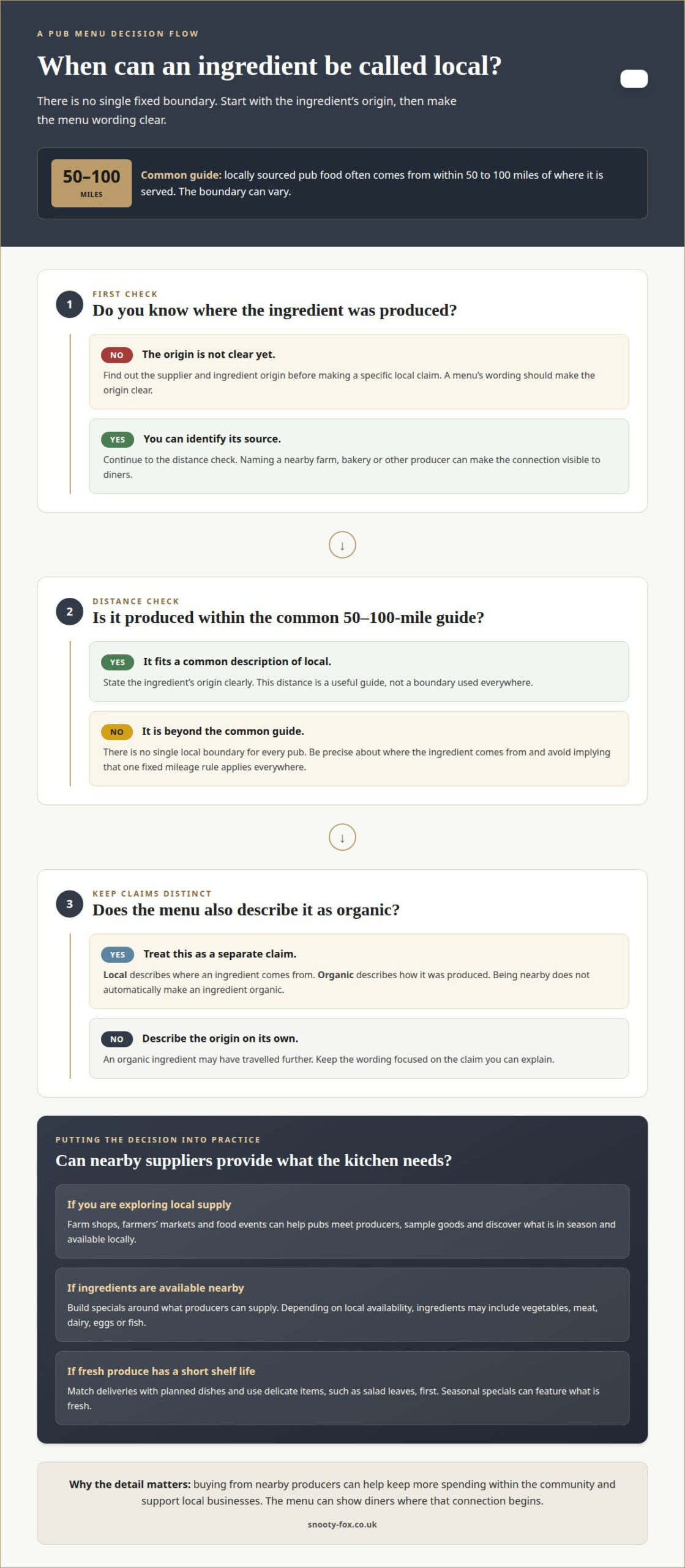
A local menu doesn’t need a single, fixed-mile boundary. Locally sourced pub food commonly uses ingredients produced within 50 to 100 miles of where they’re served, although the meaning of “local” can vary. What matters is knowing where the ingredients come from and how that journey shapes the plate.
It’s easy to see why locally sourced pub food appeals: seasonal produce can arrive fresher, bring character to a dish and connect a meal with the surrounding countryside. Choosing local suppliers can also help keep more spending within the community.
Here, you’ll learn what local sourcing means in practice, how it can affect freshness and flavour, and why it matters to producers, pubs and diners. We’ll also look at the limits of the label, so you can understand what a local claim really tells you when you sit down to eat.
For a pub, “local” commonly means food produced within 50 to 100 miles of where it’s served. There’s no single boundary used everywhere, so a menu’s wording should make the ingredient’s origin clear. A farmer 10 miles from a restaurant is one example of a nearby supplier; the distance alone doesn’t describe how the food was produced.
Pubs, inns and hotels can explore farm shops, farmers’ markets and food events to meet nearby producers and sample their goods. These are useful ways to discover what is in season and available locally. A practical first step is to identify ingredients readily obtainable nearby, then build specials around them.
British pubs may source vegetables, meat, dairy, eggs or fish from nearby producers. A local farmer might supply meat, while a fishmonger could provide seafood. The range depends on what local producers grow or make and what the pub needs for its dishes.
What is the average price of a locally sourced pub meal in the UK? There isn’t one useful figure for every meal: prices depend on the dish, portion, location and supplier costs. Local farm produce may cost more than produce bought from a large supplier, and supply chain pressures can make sourcing decisions harder for pub operators.
Buying from nearby producers can keep more spending within the community and support local businesses. Some pubs can take hyperlocal sourcing further by growing herbs or vegetables on their premises, where space and conditions allow. A small herb patch, for instance, can supply fresh garnishes for selected dishes.
Local and organic describe different things. “Local” refers to where an ingredient comes from; “organic” describes how it was produced. A nearby ingredient isn’t automatically organic, and an organic ingredient may have travelled further. Clear descriptions help diners understand each claim.
Produce can be picked closer to peak ripeness when it doesn’t need to travel long distances. That can mean firmer greens, ripe tomatoes and berries with a fuller aroma arriving in the kitchen. Shorter journeys also reduce the time between harvest and preparation, helping ingredients retain freshness. The effect depends on the crop, handling and storage, not distance alone.
Seasonality gives a pub kitchen a practical guide to what may taste best. British strawberries and raspberries are summer fruits, making them natural choices for a pudding or fruit-led special. A changing menu can follow the harvest rather than rely on the same produce all year, giving each season its own ingredients, from summer berries to autumn vegetables.
Flavour can benefit when produce is harvested ripe, rather than picked early for long-distance distribution. A ripe tomato, for example, can bring sweetness and fragrance to a salad, while freshly picked herbs can lift a soup or sauce. Simple cooking lets pubs showcase these qualities and the produce’s own character.
Nutrition needs a more careful description. Locally grown produce picked at peak ripeness can offer nutritional value as well as freshness and flavour. But “local” alone doesn’t tell you the full nutritional profile of a dish. Ingredients, preparation and the finished recipe all matter. Vegetable soup and a creamy vegetable bake, for example, can use similar produce yet differ considerably.
Freshness also affects kitchen planning. Produce from local farmers may have a shorter shelf life than produce with added preservatives, so chefs need to use it promptly. A useful step is to match deliveries with planned dishes, then feature delicate items, such as salad leaves, first. Seasonal specials can show diners what’s fresh while keeping those ingredients at the centre of the plate.
A pub’s buying choices can connect its kitchen with nearby farms, dairies, bakeries and fisheries. When a chef orders vegetables from a local grower, the sale supports the producer and gives the pub a direct relationship with its supplier. Farmers’ markets can help hospitality businesses meet producers, sample goods and discover what they may supply in coming seasons.
Regular orders can make these relationships more useful. A pub that agrees to consistent purchases with a farmer may be able to negotiate lower prices, while the producer gains a steadier customer. For example, a kitchen could plan a seasonal special around an agreed supply of carrots or apples rather than place occasional, unpredictable orders. Clear communication helps both sides plan.
Local purchasing can also help keep money circulating within the community. A producer may spend income on local labour, equipment or nearby services, creating connections beyond the original transaction. The scale of that effect depends on each business’s choices, but naming a farm or bakery on the menu makes the connection visible to diners.
Franchise pubs face a different practical balance: a standard menu can support consistency across branches, while local specials can reflect the area. Where franchise rules allow, a manager could propose a dish featuring nearby cheese or seasonal vegetables. A defined approval process, supplier details and a clear dish description help connect the local ingredient with the wider menu.
Partnerships need not stop at food orders. A pub can strengthen community ties by supporting a local sports club, joining a neighbourhood initiative or hosting a charity event. These activities give residents and producers opportunities to meet in a familiar setting. Alongside locally supplied ingredients, they can make a pub part of everyday community life, not simply a place to eat.
For diners who care about where food comes from, a menu can make a pub’s choices easy to see. Forty per cent of consumers are shopping locally. Rather than relying on a broad claim, describe a dish’s local ingredient and its origin. Naming a nearby farm beside its vegetables, for example, gives customers a clearer reason to choose that special.
A manageable start is to add a few locally sourced dishes to the specials board. Staff can highlight the ingredient and producer when describing each plate, helping diners understand what makes it distinctive. A summer special might feature vegetables from a nearby grower, while local cheese could appear on a sharing board. This lets the kitchen introduce local ingredients without changing every menu item.
Choice matters too. Vegetarian and vegan dishes can welcome diners with different preferences and dietary needs. Shareable plates, such as an antipasto platter, suit groups who want to try several flavours together. For a summer gathering, a menu could pair local vegetables with seasonal fruit, offering both savoury choices and a lighter finish.
Bring the story beyond the menu. A pub can share a photograph and caption from a visit to a local farm on Instagram, showing the people and place behind an ingredient. Comment cards or customer surveys can also reveal which specials diners enjoyed and what they’d like to see again. Use those responses to shape future dishes, while keeping descriptions specific and accurate. If you’re planning a relaxing break, plan a comfortable stay and enjoy good food at an unhurried pace.
The Snooty Fox offers a characterful hotel, bar and restaurant, giving you a comfortable base for a break built around good food and local hospitality. After exploring seasonal menus and independent places to eat, you can unwind with a relaxed stay.
Choose from a Four Poster Room, Superior Room, Standard Double Room or Compact Double Room to suit your stay. The restaurant and bar offer a welcoming place to dine or unwind after discovering the surrounding area.
For a visit that combines a comfortable place to stay with time to enjoy local hospitality, contact The Snooty Fox.
Locally sourced pub food can connect a meal with its surroundings. Let a seasonal menu inspire you to explore local hospitality at an unhurried pace.
If you’re planning a break, The Snooty Fox offers a welcoming place to stay, dine and unwind. Enjoy a change of pace and discover the character of the area around you.
Contact The Snooty Fox to discuss your stay. A relaxed visit can give you room to savour good food and make the most of your time away.
Locally sourced food means ingredients obtained from producers near the pub serving them, although the boundary varies between businesses. For diners, the useful detail is the ingredient’s origin: a menu naming a farm, bakery or fishmonger gives a clearer picture than a broad “local” label. One dish may use nearby vegetables while other ingredients come from further away, so sourcing can vary across a menu.
The Snooty Fox has a characterful restaurant serving modern British dishes and timeless pub classics. Its dining highlights include Sunday roast and afternoon tea, familiar choices for a meal together. A shareable platter is a style of dish arranged for diners to enjoy communally. The menu is the best guide to the dishes and formats available.
A dietary-inclusive menu makes suitable choices clear and gives different diners considered options. The Snooty Fox serves modern British dishes and pub classics; suitability for particular diets depends on each dish’s ingredients and preparation. Across pubs generally, vegetarian and vegan choices can broaden the options, while clear dish descriptions help guests understand what they are choosing.
There’s no single menu that guarantees success. A strong food offer suits its pub, its guests and the ingredients available from nearby suppliers. A practical starting point is a recognisable core menu, complemented by specials that change with supply. Pubs can also consider vegetarian and vegan dishes, as well as food suited to sharing, so different diners and occasions have appealing choices.
Seasonality depends on the crop, growing conditions and local harvest, so menus change through the year. In the UK, British strawberries and raspberries are summer fruits. Pubs can plan seasonal specials around what local growers have ready, then adjust dishes as supplies change. This gives diners a more useful sense of the season than a fixed menu description.
In the UK, locally sourced pub food means dishes made with ingredients produced near the pub, though there’s no single boundary used everywhere. The term refers to origin, not whether food is organic. A menu can explain its sourcing by naming particular ingredients and their producers, helping diners distinguish a genuinely local ingredient from a general claim about the whole dish.